making things click


Did you know that the typical American averages nearly 5 hours a day online? That number goes even higher if you start thinking of phone games and internet TV as online time. Add all those minutes and seconds up and you’re talking about hundreds of thousands [if not millions] of impressions all fighting to get the attention of customers you want, followers you’d like to add, or business partners you hope to attract. So how do you really break through?

As designers and artists, there are numerous techniques we can use to draw people in from a visual standpoint, but before we ever usually get a chance to do that, people and prospects do something else first. They hit up search engines. It’s not always the flashiest part of a web development effort, but SEO and SEM can generate big-time results. When done right, some business see dramatic increases in web traffic, lead generation, and lead conversion. The trick is, it’s not an exact science, and it is definitely a discipline that requires ongoing maintenance. 


When helium does SEO, we tend to focus on what we call the big 3 – original content, earned links, and relevant research. Trying to skip steps on any of these three pillars often ends with less-than-ideal results. When balanced appropriately, however, we dive deep into the keywords, phrases, and questions a given audience has.


We look carefully at the little nuances between the brands who purchase listings versus those who earned an authentic first-page or top-ten ranking – who stayed there longest? What did it likely cost them? Did it really reach people ready to make a transaction or deal? Then, we take a look at the digital neighborhood a website is going to live in. How do the neighbors act? What do we want to say differently? What can we say better? Who can we connect with that shares our perspective and gives us the kind of legitimacy search engine algorithms prefer? After that, we start putting words to page… and we do it in ways that make people and robots both interested in reading them.  Our ultimate goal is that you shouldn’t even notice SEO is happening on your site… until you actually do a search and see yourself ahead of your competitors.


doing more at a distance

We have been very fortunate that amidst various closures and social distancing orders, the helium team has been able to work remotely and stay well connected. In a lot of ways, we were already prepared for these measures since we routinely work in non-traditional settings when we do site visits to real estate and hospitality properties. While some of us are taking photos or meeting with owners and developers, the rest of the team stays in touch with email, chat, phone, and file sharing for things like sketches, mood boards, design comps, and preliminary concepts.


In many ways, collaborating at a distance is a very positive exercise. Often, it reveals new ideas that are completely without influence from someone sitting nearby. As well, it forces us to develop concepts and designs that don’t require a lot of explanation or convincing to resonate well with other people. If they can’t be easily summarized in an email or phone call, then that can be a signal to return to the drawing board and refine, enhance, or think in a new direction. We’re used to this style of working on various projects here and there… but then we took it next level by opening a second office in Baltimore. Now, long-range collaboration is a more integrated part of our everyday process… even before it became required for public safety.


Because we spend a lot of time working with seasonal markets, a few of our clients have asked us for suggestions on how to make the most of social distancing time. This is a great time to pursue internal projects that normally get pushed aside during busier periods. A website refresh can be a smart decision right now, not just because there’s time to finesse details but also because it gives you the tools to hit the ground running when normal business activities resume. Or, it could be that this is the optimal time to finally integrate e-commerce services and capture online sales. Many of our clients are focusing on social media, and looking at ways to enrich engagement and foster deeper connections with audiences. Updated logos, revamped corporate branding, breaking into new media… all are great ways to ready your business for the future, and it’s all work that helium can execute remotely.  Downtime doesn’t have to be a downturn. It can be the dress rehearsal for your brand version 2.0.


New website for Natiivo


we’re a moody bunch with a bunch of mood boards

Mood boards are a critical step in our process. They allow us to capture the visual essence of a brand or project in a realm that is somewhere halfway between real and imagined. It allows us to help clients tap into their own creative vision and communicate their intentions and feelings much more clearly than words will sometimes allow.

Snippet of a mood board for our client, Casana, which helped shape the brand.

The mood board process helps us creatively as much as it help the client understand a direction. In our creative process, going through tons of visual inspiration will help shape the intangible concept in our head. Image after image starts to refine and idea and construct a direction that ultimately guides where we go with the brand — from storytelling, statements, and print collateral like brochures, packaging and stationery, to online material such as websites. The mood board helps get all the ideas in front of us.

 A snippet of our mood board for drip pop

With everyone picturing the same visual universe, we find projects move forward more efficiently. Instead of spending round after round of revisions to nail down design direction, we can spend more time executing the special details that make a project one of a kind. It might mean having extra time to add 3D renderings [check out helium reality  for more on this]. Other times, a streamlined creative development process may allow sales efforts to launch sooner, a quicker transition between temporary and permanent websites, or the addition of special finishes on printed pieces and animations on digital elements. 

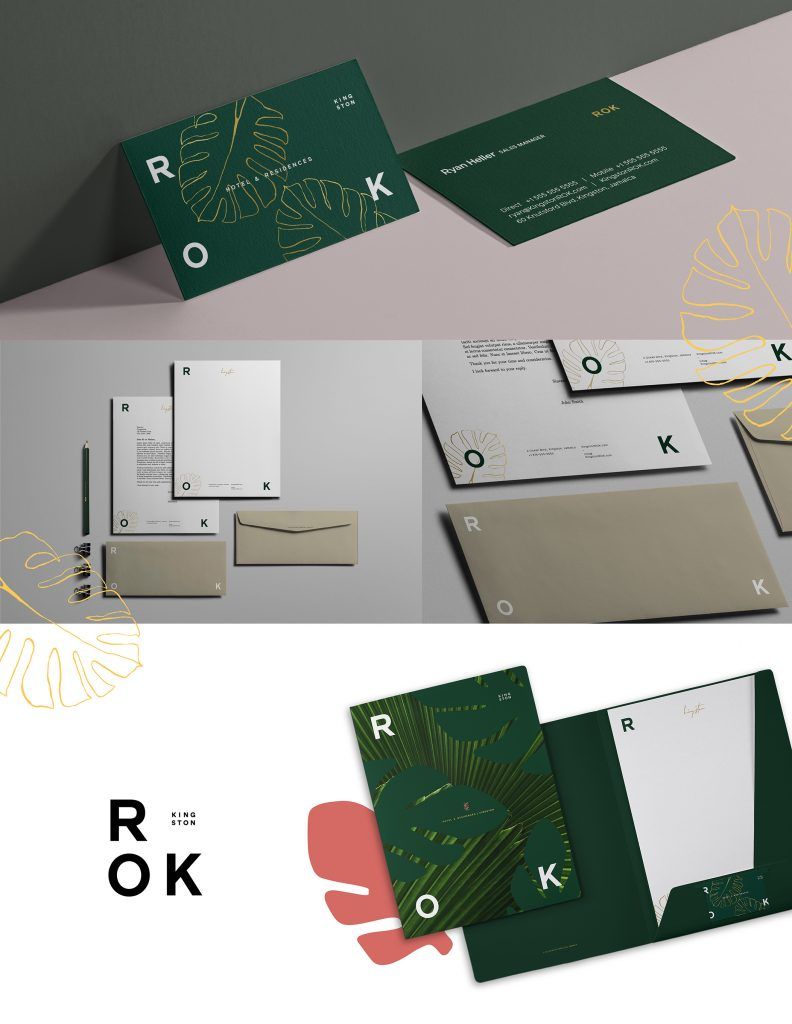
A snippet of our mood board for ROK Hotel and Residences

So, what goes into a mood board? That’s both the fun part and, perhaps, the most challenging. If a picture is worth a thousand words, then it easily takes a thousand [or more] pictures to convey an idea as complex as an experience, an idea, a destination, or a home. We comb through a gross amount of images in magazines, websites, books, and everyone’s favorite: Pinterest. We’ve got our own bank of photographs and items we’ve collected of the years.
Mood boards are made up of collected items on Discovery trips and travels as well.

We scan what the competition is doing and look for uncharted territory. We sketch on notepads. We take our own photos of things that inspire us. We start arranging things together in a composition. We see what other team members think. We switch things in and out. And then… we walk away for a while and see what still strikes us as powerful and unique. After we’ve done all that about a dozen times [usually more], our clients get a chance to dive into the mood board themselves. It’s at that point that our role shifts from creators to listeners and observers. What was the initial reaction? Positive? Awe-inspired? Energized? Which elements are getting the biggest and best responses? Is it color? Camera angle? Something else? The mood board brings all of this to the forefront and becomes the anchor point for everything that comes next.  


print = not dead.


Yes, we know the world is getting more digital by the second. Yes, we appreciate paper is a precious resource. And yes, we are aware that the media landscape is so not 1994. We get all of that. You will still never hear us say that print is outdated. Ever.
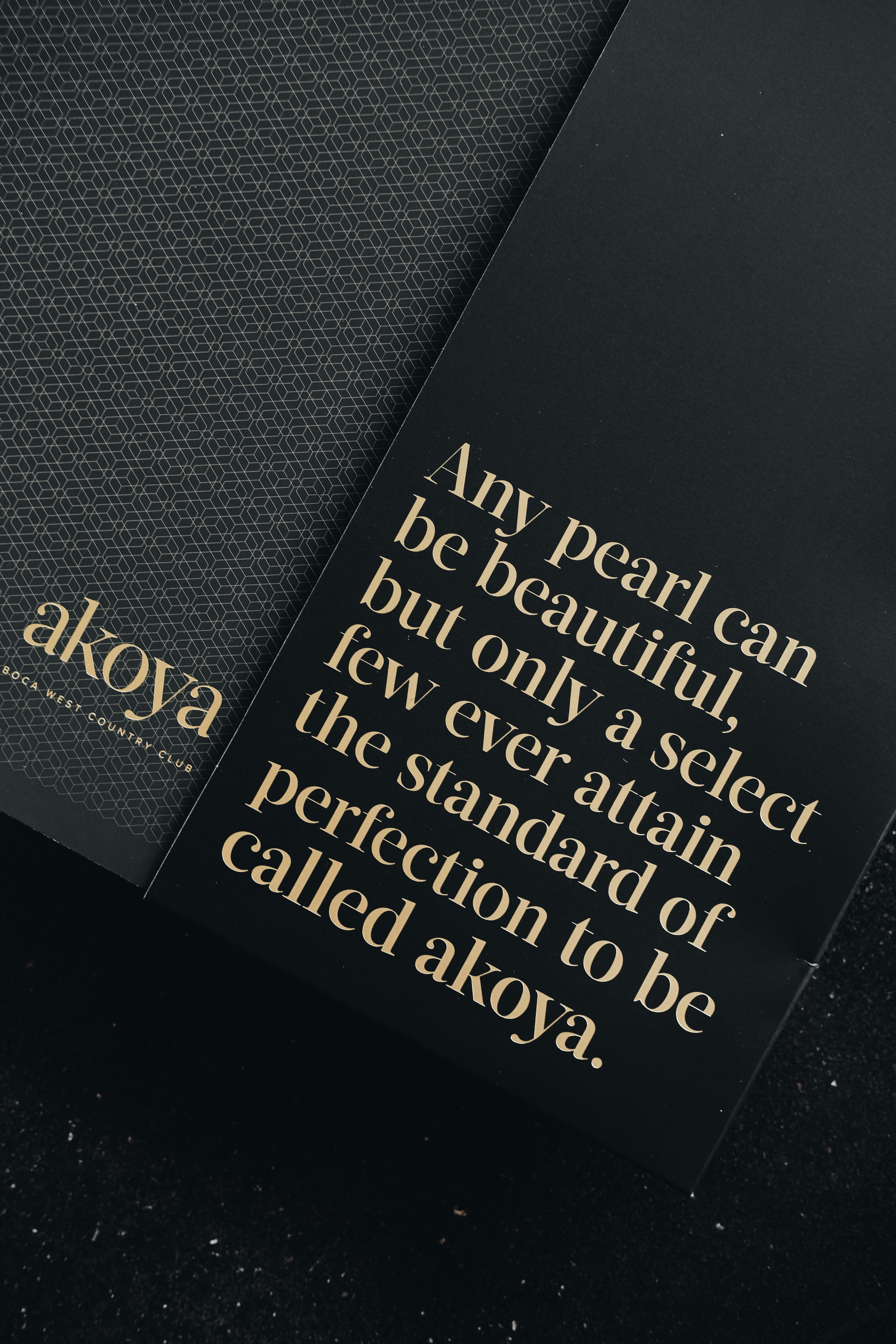
The truth is, print pieces simply have to work harder and be smarter than they did in the past. A brochure can’t just be pictures and words folded into a booklet – it has to be an interactive journey. The feel of the paper or a gloss varnish or embossed logo is a tactile experience that engages the sense of touch in the way swiping and tapping a screen does not. The anticipation of opening an envelope creates a moment that primes an audience for the message inside. An artfully crafted package stands out on a store shelf and says “take me home” before a salesperson even utters a single word. 


That’s the benchmark we aim for when people come to us looking for collateral, business cards, POP displays, direct mail, and other print advertising and marketing materials. A piece that’s “not just another” anything, but rather, a piece that helps redefine what’s possible for print. In fairness, we have a lot of resources at our fingertips for making that happen. Amazing things are possible in the world of inks, coatings, and finishes these days… like glow in the dark, scratch-and-sniff, waterproof things. Paper keeps upping its game too with everything from re-printable paper, to paper that looks and feels like leather or plastic, to paper that can be used as furniture. Seriously. Then there are techniques for taking print pieces from flat to fantastic – 3D, Pop-Ups, unique folding designs – it’s truly fascinating how much print really can do. 


So, while we agree that it’s very cool to explore the depths of digital design, the things that happen on screen are all limited by one thing – it always happens on a screen. Only print has the power to take countless shapes, sizes, colors, and textures that people can hold and keep, and that can’t be turned off. 


Be sure to follow us on instagram or facebook for an inside look into our discovery session trips, latest projects and award winning work!

an idea studio


People often ask us, “How do you come up with ideas?” The short answer is years and years of practice with sorting out good concepts and bad concepts. Along with a shameful amount of coffee. The longer answer is that each time we’re presented with a new challenge or project, each person on the team dives into their own head and starts building a list [or pile] of every idea that wanders into their minds. Some of us jot that down, or sketch it, or give it a quick design work up. At the beginning stages, the most important thing we do is realize that creativity design, branding design, advertising design, and interactive design all start with a concept first. The best concepts are those that capture attention from the start, and then show themselves to have deeper meanings and connections over time. 


Once we all feel as though we’ve taken our own brains as far as we can, we come together and share what each of us believes to be our very best ideas. We’ve already “edited” ourselves to eliminate concepts we know have been done before, those that are off-target for a given audience, those that are just too complicated (or too expensive) to execute, or those that are one-dimensional. Knowing those things are all part of the years and years of practice part. What usually happens while we’re sharing is that one concept sparks a new, or complementary idea in someone else. One of us might have an incredible idea for a logo, but there’s something about the shape or color that inspires another team member to create a tagline. It even happens sometimes that two or more of us were all thinking in the same direction and snap – a bunch of components of a brand, sales campaign, or website all come together at once. It’s awesome when that happens. When it doesn’t, we work our best ideas until the snap happens. Or, sometimes we go back to the drawing board. This might all happen dozens of times on a single project before there’s anything to show to the client. Once our OCD heads are in love with an idea, then it’s finally something worth getting off the ground and in front of an audience. 

books ‘n stuff

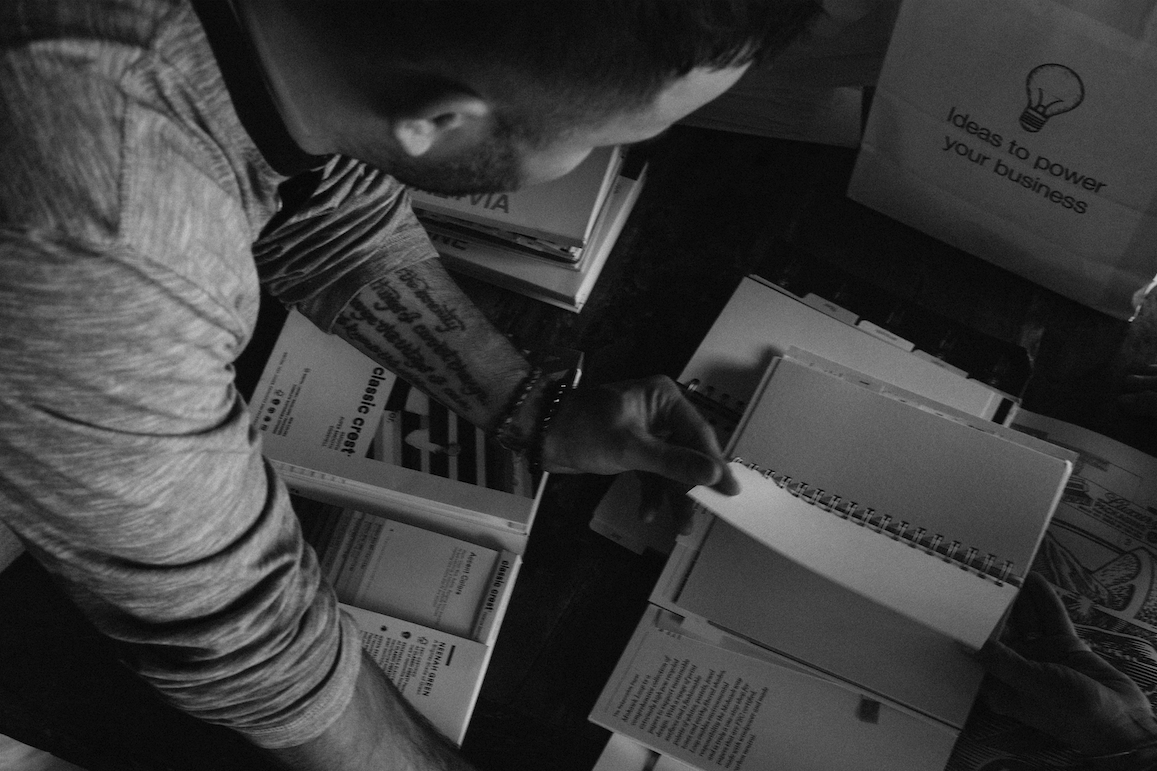
There has been a mild (ok, not-so-mild) obsession with book covers recently. More like a life-long intrigue that has snowballed into said obsession. That late night scrolling through eBay to find vintage books with great typography or illustration, when such scrolling turns into a rabbit hole where your shopping cart acquires a book from every decade. From old medical illustrations to modernist typography – book covers have been a huge source of inspiration for all types of design work. And, of course, the book itself – the story – is the heart of what we do as a brand studio. Each work has a history, a message, a soul – the visual communication of its cover, the written word that shapes its narrative, the worn pages from those who’ve been impacted by it; books are fuel for creatives.
When we are developing a brand, it always starts with a story. We tap into the heart and soul of the company – who they are, what the essence is. Much like an author crafting a character, we shape the narrative of a brand then uncover how to communicate it in all forms. Just as we wear clothing to reflect our personality, as a designer we are constantly using elements such as color, type and messaging to craft the unique persona of a company to its market. The process is organic, both strategic and highly intuitive. But the brand story is ultimately what sets the road map for brand identity, messaging, graphic design, website design, photography, and all marketing materials. You can explore some of our brand stories by clicking here.

A book cover has the tall order of capturing the spirit of a story in a single composition, enough to emotionally engage and connect with a potential reader. This can be done through typography, photography, illustration, design, color, shape, or pattern. But whatever method, the end product can be really, really, really cool. Enough to keep this designer up scrolling Pinterest and eBay for hours on end.
Take a look at some of the books and book covers we’ve been wide-eyed for.


helium in the dominican republic

When a 5-Star Resort calls, you answer. So is the case with our newest project for Excellence Resorts in the beautiful Dominican Republic. Of course there is only one way to truly know a property and be able to speak towards their amenities, service and experience: a helium discovery session!  We were forced [yeah right] to take a trip tot he DR and explore the resorts ourselves. The verdict? A stunning collection of properties with the most hospitable people on earth and breathtaking views. We so enjoyed our time there and can’t wait to go back! Take a look at some of the photos we took on our trip!


We are excited to begin working with Excellence Resorts on a new digital and print marketing campaign, where we will deliver brand messaging, experience and design work to visually communicate the incredible resort!
Be sure to follow us on instagram and facebook for an insider look into all of our discovery sessions!